
What goes wrong with a drain
Most drain damage comes down to three things. Tree roots find a joint and grow into the pipe looking for water, until the mass of root catches everything that passes. Pipes crack from ground movement, heavy loads over a shallow drain, or simple age. And in the worst cases a section collapses or is crushed, which stops the flow altogether and often lets soil wash into the pipe. Old clay pipes and the pitch fibre pipe used in some 1950s to 1970s homes are the most likely to give way.
Signs to look out for
A damaged drain tends to announce itself in one of these ways:
- Blockages that keep coming back after clearing
- Slow drains, gurgling, or a smell you cannot trace
- A wet, sunken or unusually green patch of ground over the line of a drain
- Damp in a cellar or at the base of a wall near a drain
- A camera survey that has already shown a crack, roots or a displaced joint
How we repair it
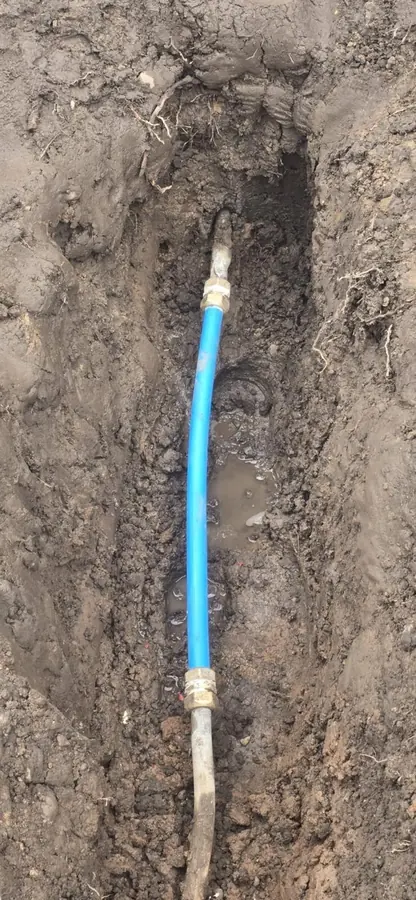
We confirm the fault first, usually with a camera (CCTV drain surveys), so we know exactly where the damage is and how much of the pipe is affected. Then we dig down to the damaged section, cut it out, and fit new pipe and joints laid to the right fall. We bed the pipe, check that water runs through it freely, and fill the trench back in. Digging is only part of the job: we also make good the surface afterwards, whether that is soil, paving or a drive.
Not every fault means a big dig. Sometimes a single section is replaced, sometimes a joint is re-made. We tell you which, and why, before any work starts. If the damaged section is on a shared drain or a public sewer, responsibility may lie with United Utilities rather than you, and we can tell you which. Some home insurance policies cover drain damage, so read our guide on whether insurance covers drain repairs before you pay for anything.

What affects the price
How deep the pipe is and how long the damaged section is are the biggest factors, followed by what is on the surface that has to be lifted and put back: lawn, paving, tarmac or concrete. Access matters, because a tight space may mean digging by hand. It also depends on whether one section or several need replacing, whether the drain is shared, and whether the work is urgent. Putting a repair off rarely saves money: a leaking pipe can wash soil out from around itself, and a small fault becomes a bigger dig. You get a firm price before we start.
What happens after you call
You speak to the team. If you already have a survey, tell us what it found; if not, we will usually start with a camera. We agree the repair and the price, and arrange a day to do the work. Afterwards we check the drain runs freely and leave the area tidy.