
What drain jetting is
Jetting uses a hose with a specially shaped nozzle, fed with high-pressure water from the van. Jets pointing backwards pull the hose along the pipe, and jets pointing forwards and sideways break up what is in the way and scour the pipe wall. The water carries the debris along with it. Because it cleans the wall of the pipe instead of punching a hole through the middle, it is the right tool for the kind of build-up that makes the same drain slow down again a few months after it was rodded.
Signs a drain needs jetting
Rods are fine for a soft blockage near an access point. Jetting is the better answer when:
- The drain has been cleared before and has slowed down again
- The pipe is coated with fat, oil and grease, common on kitchen runs
- Scale or silt has built up along a long, slow run
- Fine roots have worked into a joint and are catching debris
- Rodding has not cleared the blockage
How we do it
We find the access points first: a gully, an inspection chamber or a rodding eye. We choose the nozzle and the pressure to suit the pipe. Older drains need care, because clay joints, pitch fibre pipe and cracked sections can be damaged by too much pressure. Where we have any doubt about the condition of the pipe, we recommend a camera look first (CCTV drain surveys).
The aim is to get the loosened debris out of the system, not to push it round the corner and leave it. When the line is clear we run water through to check the flow, and if the blockage turns out to be a symptom of something else, such as a broken pipe, we tell you what we found and what to do about it (drain repairs).

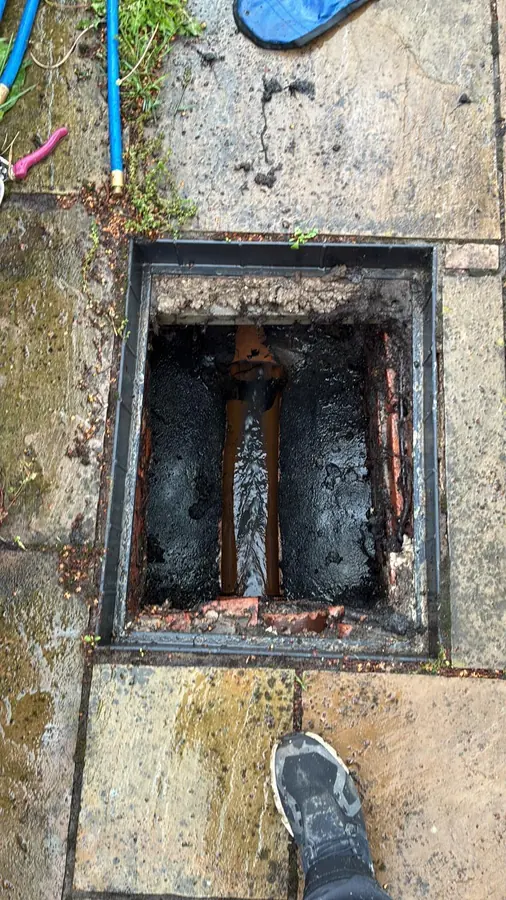
Jetting or rodding: which do you need
Both methods have their place, and a good drainage engineer uses whichever suits the blockage. Drain rods are quick for a soft blockage close to an access point, such as a lump of paper or a nappy in a toilet branch. Jetting takes longer to set up but cleans more thoroughly, so it earns its place on long runs, greasy kitchen drains and any drain that has been cleared before and then slowed down again. If you are not sure which you need, do not worry: describe what is happening when you call and we will say which we would use and why.
What affects the price
The length and diameter of the run, how heavy the build-up is, how many access points there are and whether they are easy to open all change the job. So does whether a camera is needed before or after to see what the pipe looks like, and whether it is out of hours. You get a firm price once we have seen the drain and before any work begins.
What happens after you call
You speak to the team and describe the problem: which fixtures are affected, whether it has happened before, and roughly how old the property is. We tell you whether jetting is likely to be the answer and when we can get a van to you. On site we confirm the cause, agree the price, jet the line and check it runs clear before we leave.